
Azuébar
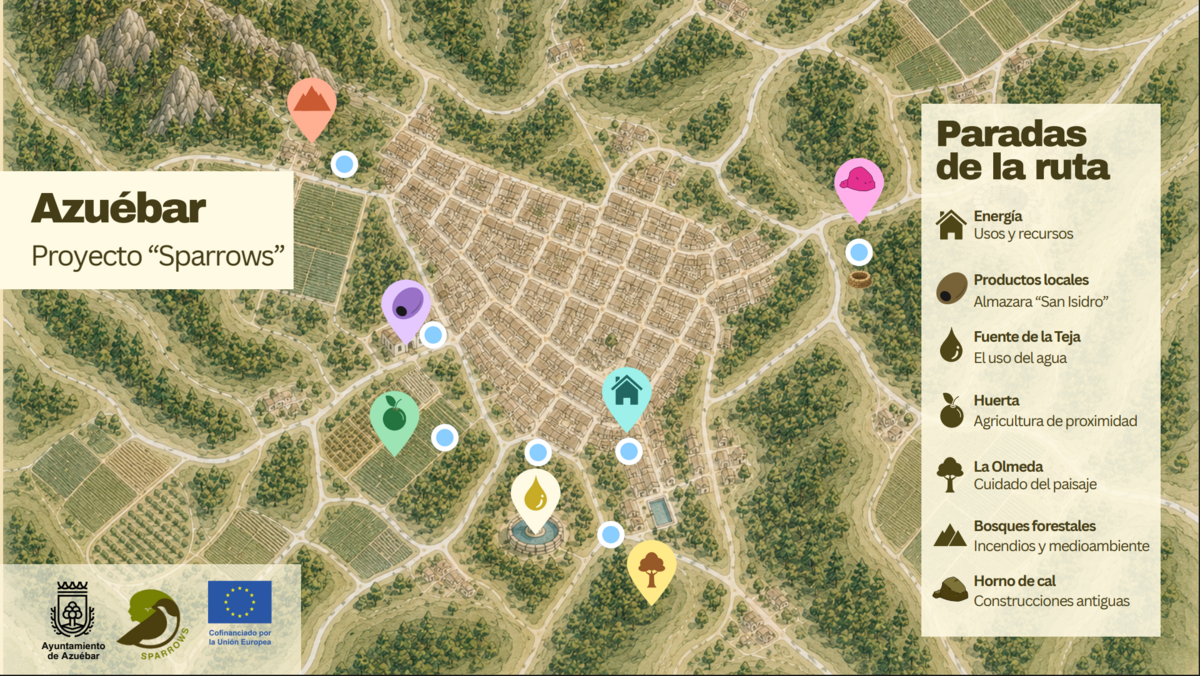
Fuente de la Teja: Water and its importance in Azuébar
Water has historically been a symbol for Azuébar and also a fundamental resource for its life and agriculture.
In a Mediterranean territory with irregular rainfall, water management has been essential for cultivating orchards and maintaining activity.
In places like “Fuente de la Teja” and in the old waterwheels and irrigation channels scattered throughout the municipality, we can observe how the rural community of Azuébar developed ingenious systems to make the most of every drop of water. These structures allowed water to be available from wells and springs to the irrigation ditches and channeled to the fields, making irrigation possible even during periods of low water availability.
Huertas: Agriculture and Food in Azuébar
Orchards have traditionally been one of the most important spaces for life in Azuébar.
Families grew much of their own food there, including vegetables, fruits, and legumes. In addition to the orchards, the municipality's agricultural landscape is characterized by traditional crops such as olive and carob trees, which are well-adapted to the Mediterranean climate. This form of agriculture was based on making the most of local resources, crop diversity, and production for personal consumption or sale in nearby markets, fostering self-sufficiency and a strong connection between people and the land.
Forests: The Forest Wealth of Azuébar
Azuébar is located in a natural environment of great ecological value, within the Sierra de Espadán Natural Park, one of the most important forest areas in the Valencian Community.
The municipality is surrounded by emblematic landscapes such as La Mosquera, the mountain range between the Bellota and Carrascal peaks, and the Dehesa de Soneja area, which form a mosaic of forests, woodlands, and agricultural lands.
These ecosystems are home to a great diversity of species and fulfill essential functions such as soil protection, water regulation, and biodiversity conservation. Furthermore, they have historically been areas of traditional use for rural communities.
La Olmeda: The Natural Area of Azuébar
One of Azuébar's natural areas, La Olmeda is an example of a local ecosystem that is home to a great diversity of plant and animal species.
Ecosystems fulfill very important functions, such as maintaining the natural balance, protecting the soil, and promoting biodiversity. Areas like this also have great natural and cultural value for the municipality.
Conserving them is essential so that future generations can continue to enjoy them.
Lime Kilns: Traditional Architecture in Azuébar
The traditional architecture of Azuébar is an example of adaptation to the Mediterranean climate and the rural environment.
Houses were built with local materials such as stone, earth, and lime, readily available in the area.
The thick masonry walls acted as thermal mass, keeping the interior cool during the summer and retaining heat in the winter.
The use of whitewash helped reflect solar radiation and protect the walls from dampness.
Furthermore, the layout of the narrow streets, interior courtyards, and small windows contributed to creating shade and natural ventilation, reducing the energy needed for heating and cooling.
San Isidro Olive Mill: Local Production
In Azuebar, the olive oil cooperative has been key to the town's economy.
The village's farmers organize themselves to produce and market olive oil, a product that embodies local tradition and identity.
This model allows them to share resources, improve production, and ensure the village's economy remains vibrant.
Furthermore, the cooperative model fosters collaboration among neighbors and helps preserve traditional cultivation and production techniques, thus keeping alive the knowledge of the land and its connection to sustainability.
Energy Management in Azuébar
The solar panels installed on the sports field and at the House of Culture reflect Azuébar's commitment to moving towards a sustainable energy model. The town seeks to harness solar energy to reduce consumption of polluting sources and protect the environment.
In the past, the energy needed in homes and on farms was obtained entirely locally and naturally: animals and manual tools were used for work, and resources such as firewood from holm oaks, carob trees, or cork oaks were gathered from the forests for heating and fireplaces. This way of life, based on local resources, allowed energy needs to be met efficiently and sustainably.